German reunification
The political changes surrounding the Berlin Wall culminated in a reunified Germany at the start of the decade.
ISSUE 1990—1999
A new world takes shape.
The Cold War ended, the web arrived, pop culture fragmented into dozens of scenes, and everyday life started moving online.
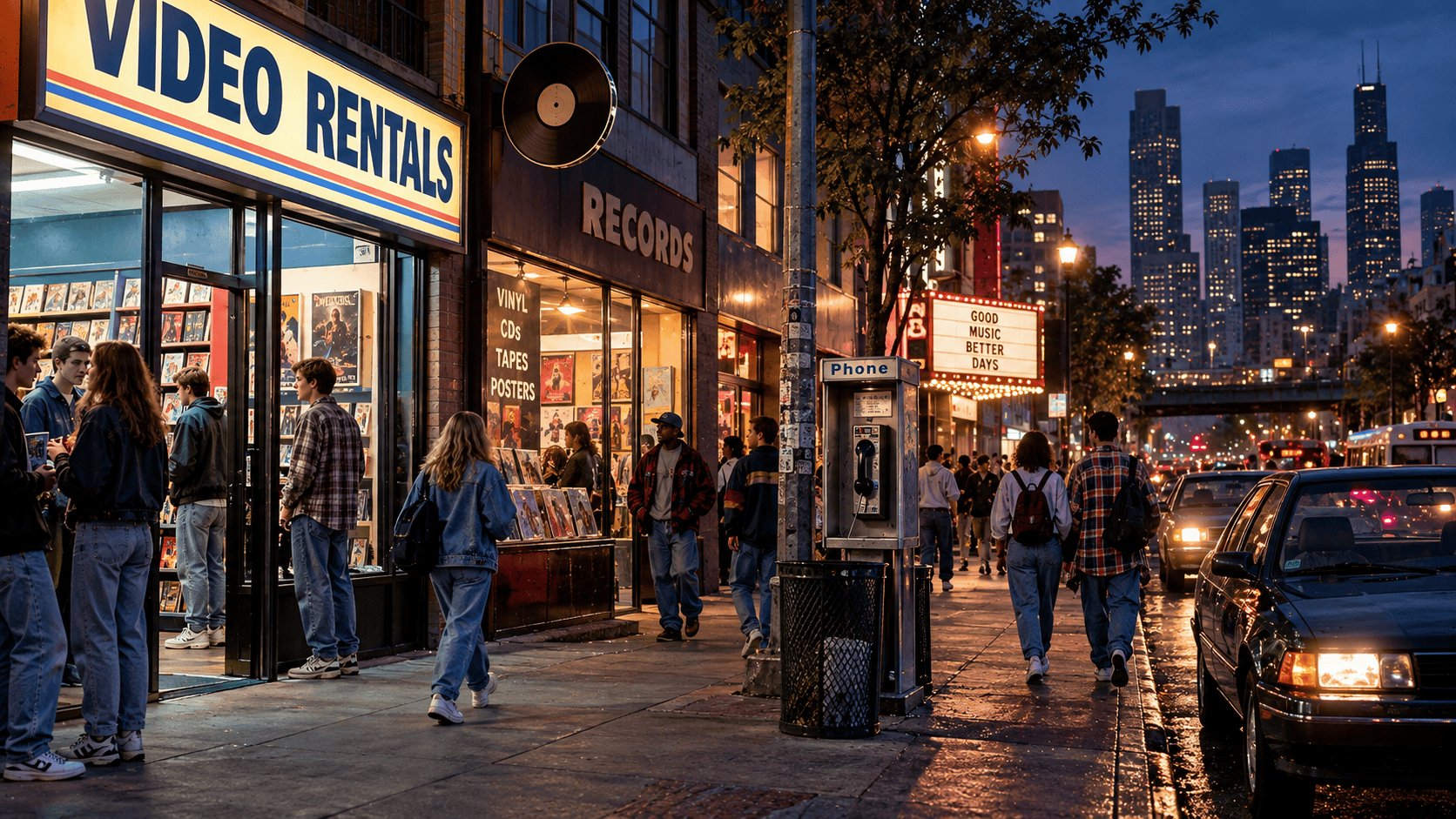
01 / OVERVIEW
The 1990s accelerated globalization and brought the digital age into ordinary life. The World Wide Web moved beyond research institutions and started transforming communication, commerce and media.
By the end of the decade, the dot-com boom had created new companies and new expectations about how people would work, shop and interact.
Politics also entered a new phase after the Cold War. The Soviet Union dissolved, European integration deepened and international interventions shaped conflicts from the Persian Gulf to the Balkans.
Technology became smaller, faster and more personal. Mobile phones spread, the first SMS message was sent, home computers improved and email entered more workplaces and households.
Culture mixed optimism with irony and unease. Grunge spoke to alienation, hip-hop became a dominant mainstream force, television sitcoms defined urban comedy and independent film flourished alongside CGI-heavy blockbusters.
Fashion rejected much of the polish of the 1980s. Flannel, loose denim, athletic wear, minimalist dresses and thrift-store style became as visible as late-decade pop glamour.
As 2000 approached, Y2K fears showed just how dependent society had become on networked computer systems.
02 / EVENTS
The political changes surrounding the Berlin Wall culminated in a reunified Germany at the start of the decade.
A U.S.-led coalition expelled Iraqi forces from Kuwait and demonstrated the military balance of the post-Cold War era.
The USSR collapsed in 1991 and fifteen independent states emerged from the former union.
Mass killing in 1994 devastated Rwanda and became one of the decade’s worst humanitarian catastrophes.
Multiracial elections in 1994 brought Nelson Mandela to the presidency and formally ended apartheid rule.
The 1995 bombing of the Alfred P. Murrah Federal Building shocked the United States.
The 1995 peace accord brought the Bosnian War toward an end.
The 1998 settlement became a major milestone in the Northern Ireland peace process.
The alliance launched an air campaign in 1999 during the Kosovo conflict.
The 1999 attack became a defining American tragedy and intensified debate over school violence.
British rule ended in 1997 as Hong Kong returned to Chinese sovereignty.
Her death in a 1997 Paris car crash triggered a worldwide outpouring of grief.
The political scandal led to impeachment proceedings against U.S. President Bill Clinton.
The euro was launched for electronic accounting and financial transactions in 1999.
Fears that two-digit year formats could disrupt computer systems spread as the millennium approached.
The cloning of Dolly demonstrated that an adult mammal could be cloned from a somatic cell.
The 1997 mission landed successfully on Mars and returned widely followed images and data.
The United States and United Kingdom carried out strikes against Iraq in 1998.
Poland, Hungary and the Czech Republic joined the alliance in 1999.
The WTO began operating in 1995 as a central institution of international trade.
03 / TECHNOLOGY
The 1990s connected computers, homes and businesses through the web, digital media, new software and rapidly improving consumer electronics.
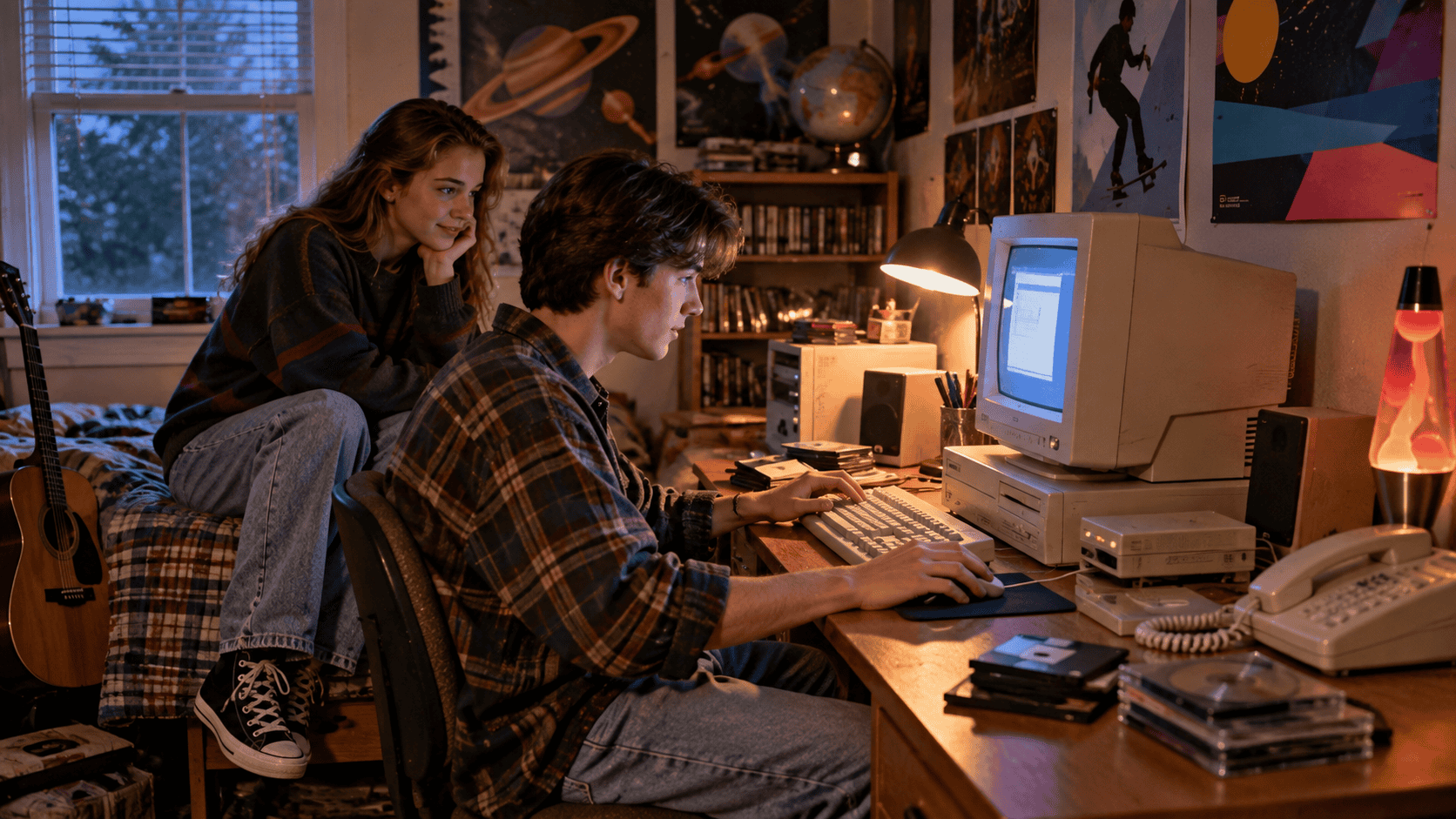
The web moved from a research project into public life and transformed publishing, communication and commerce.
Second-generation mobile systems made cellular communication more efficient and increasingly accessible.
Digital image editing entered a new era as Photoshop became a standard creative tool.
The orbiting observatory delivered extraordinary astronomical images and major scientific discoveries.
Sony’s console helped shift home gaming toward 3D graphics and disc-based media.
Digital video discs offered higher-capacity optical storage and a new home-video format.
Java became a widely used language for networked and cross-platform applications.
The search engine launched late in the decade and changed how people navigated the growing web.
The antidepressant became one of the most discussed medicines of the decade.
Satellite navigation grew more useful outside military applications.
Digital photography began moving toward the consumer market.
The collectible plush toys became one of the decade’s most famous consumer crazes.
Microsoft’s operating system brought a new graphical desktop experience to a huge home-computer audience.
Early MP3 devices hinted at a future beyond cassette and CD listening.
The company started as a DVD-by-mail service at the end of the decade.
The prescription drug became a major medical and cultural story after its 1998 approval.
Automated external defibrillators became more practical for emergency use outside hospitals.
Consumer-focused robotics companies began exploring autonomous household devices.
Health websites brought medical information to a rapidly expanding internet audience.
Universal Serial Bus simplified how computers connected to peripherals.
04 / CULTURE
Grunge, sitcoms, collectibles, rave culture, teen pop, animation and hip-hop all thrived at the same time, giving the 1990s a deliberately mixed identity.
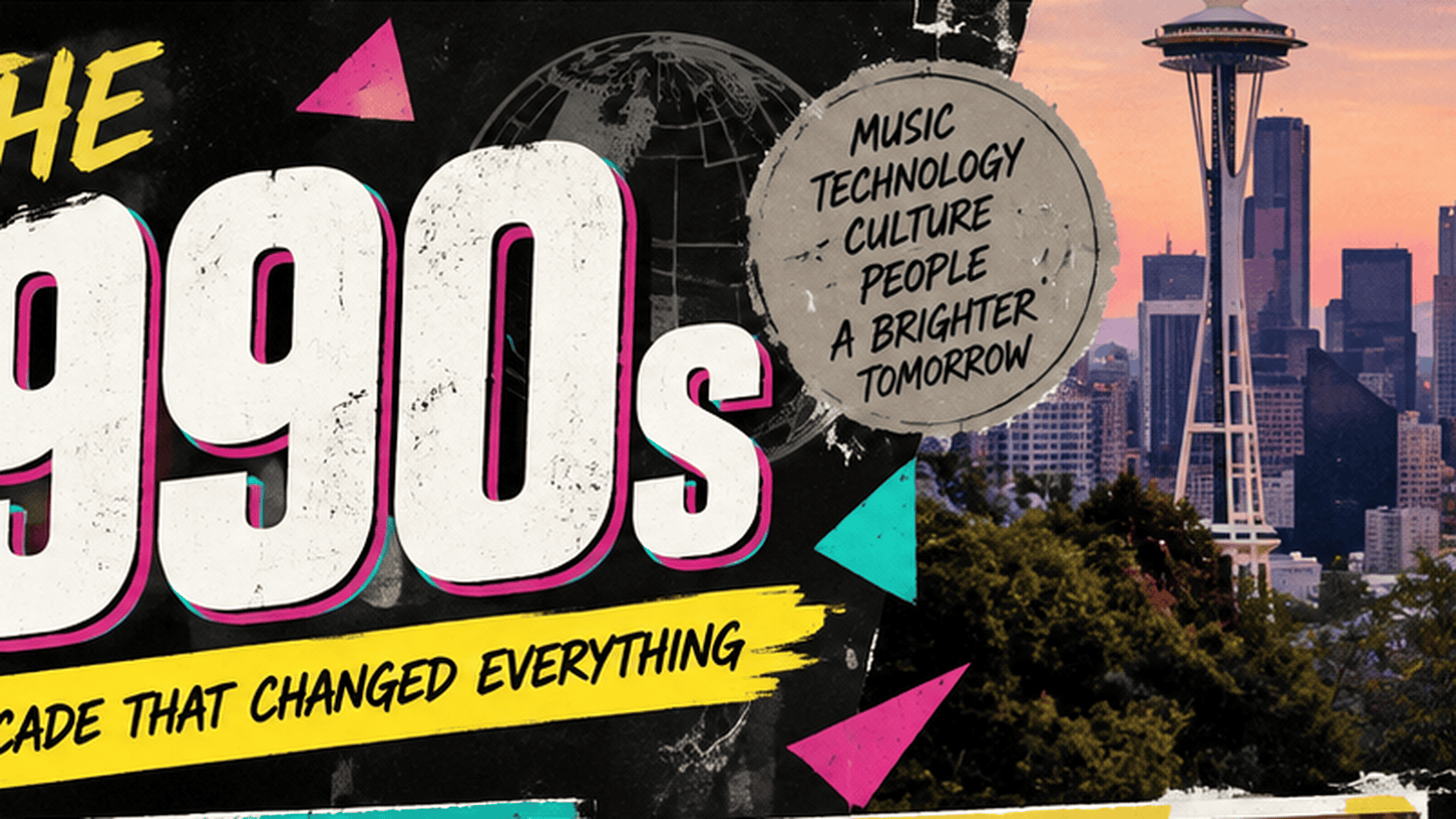
The Seattle sound moved into the mainstream and made flannel, distortion and emotional directness part of youth culture.
Shows built around unscripted people and situations established a format that would dominate later television.
The sitcom became one of the decade’s defining portrayals of young adult friendship and city life.
Its observational comedy turned everyday awkwardness into a hugely influential television style.
The animated series became a durable form of American social satire.
Pocket-sized digital pets became an international craze.
Collectible cardboard discs swept through playgrounds and schools.
Inline skating became both recreation and youth-fashion statement.
The cable channel created a dedicated home for animation.
Polished vocal groups became a major force in late-decade pop.
The film became a worldwide phenomenon and one of the defining media events of the decade.
The interactive toy sparked a shopping frenzy in the late 1990s.
British guitar bands turned a local scene into an international cultural moment.
The animated comedy pushed television satire toward deliberately provocative territory.
Their girl-power message became a global pop phenomenon.
The series captured the decade’s fascination with conspiracies, aliens and institutional mistrust.
The collectible card game created a new hobby market and gaming community.
The hip-hop subgenre gained huge mainstream visibility and intense public debate.
Shows centered on adolescent relationships became a major television format.
Electronic dance music, warehouses and club scenes expanded through an international youth underground.
05 / AMERICA
Grunge put the Pacific Northwest city at the center of global youth culture.
Large themed resorts reshaped the Strip and broadened the city’s tourist appeal.
Theme-park expansion reinforced the city as a major family-travel destination.
The Bay Area technology boom accelerated around software, personal computing and the early internet.
The Bulls dynasty and Michael Jordan gave the city extraordinary global sports visibility.
Crime fell sharply while finance, media, art and nightlife helped fuel a widely discussed urban revival.
The 1992 unrest following the Rodney King verdict exposed profound racial and social tensions.
South Beach became an international center for nightlife, fashion and revived Art Deco glamour.
The 1996 Summer Olympics placed the growing New South city on a global stage.
Independent culture, urban planning and a growing creative scene shaped the city’s identity.
Country music expanded commercially and strengthened the city’s entertainment economy.
Live music and technology helped raise the city’s national cultural profile.
The dot-com boom transformed the Bay Area economy and housing market.
Political scandals, partisan conflict and government shutdowns dominated headlines.
The Big Dig became one of the most ambitious urban infrastructure projects in the country.
Denver International Airport opened in 1995 and became a major regional gateway.
Rapid Sunbelt growth continued to expand the metropolitan area.
The Mall of America opened nearby in 1992 and became a national retail attraction.
Tourism remained anchored in music, cuisine, festivals and historic neighborhoods.
The auto industry remained essential while the city continued confronting economic and urban challenges.
06 / FASHION
The decade moved away from the excess of the 1980s and made casual, loose, secondhand and deliberately simple clothing part of mainstream fashion.
Flannel shirts, ripped denim, thrift-store layers and work boots turned anti-fashion into a recognizable look.
Fluorescent and high-contrast colors survived from the late 1980s into early-decade sportswear.
Denim bib overalls became casual staples for men and women.
Minimal lingerie-inspired dresses reflected the decade’s move toward cleaner silhouettes.
Chunky soles returned across club, pop and alternative fashion.
Midriff-baring tops became a mainstream youth look.
Lightweight color-blocked jackets became everyday casual wear.
Fabric-covered hair elastics were ubiquitous accessories.
Loose denim became closely associated with hip-hop and skate culture.
Small colorful clips became a defining late-1990s hair accessory.
Close-fitting necklaces moved between goth, alternative and mainstream fashion.
Hip-hop helped turn the casual hat into a widely copied style.
Short, high-waisted dresses mixed nostalgic silhouettes with alternative styling.
Bleached spiky hair became a highly recognizable late-decade men’s hairstyle.
Hands-free waist bags remained practical symbols of casual street fashion.
Color-changing accessories returned as part of the decade’s taste for playful nostalgia.
Biker and minimalist leather styles remained central to alternative wardrobes.
Simple low-profile sneakers paired easily with the decade’s stripped-down casual looks.
Strapless fitted tops became a popular late-decade trend.
Metal chains attached to jeans were associated with skate, punk and alternative style.
07 / MOVIES
Independent cinema, CGI spectacle, animation, thrillers and generation-defining dramas all flourished together.
Quentin Tarantino’s nonlinear crime film helped redefine the possibilities of independent cinema.
Groundbreaking visual effects made realistic digital dinosaurs a blockbuster sensation.
The 1999 science-fiction film combined cyberpunk ideas with highly influential action design.
The film connected one man’s life to major moments in recent American history.
Steven Spielberg’s Holocaust drama became one of the decade’s most acclaimed films.
James Cameron’s epic romance became a worldwide box-office phenomenon.
The psychological thriller became an unusual genre film to dominate the Academy Awards.
Martin Scorsese’s crime epic became a benchmark for modern gangster cinema.
Disney animation reached another commercial and musical peak.
Pixar’s first feature proved that fully computer-animated filmmaking could sustain a major theatrical story.
Computer-generated effects pushed action spectacle into a new technical era.
The supernatural thriller became famous for its atmosphere and final revelation.
The teen comedy translated Jane Austen into the language of 1990s Beverly Hills.
The Coen brothers blended crime, dark comedy and regional character into a distinctive modern noir.
The kinetic Scottish drama became a major cult film of the decade.
The prison drama developed an especially strong reputation through home viewing and later audiences.
The historical epic became a major awards success.
Its opening battle sequence changed expectations for cinematic realism in war films.
John Singleton’s debut brought South Central Los Angeles to the center of a powerful coming-of-age drama.
Low-budget found-footage horror used internet-era buzz to become a remarkable commercial success.
08 / MUSIC
Grunge, hip-hop, R&B, Britpop, alternative rock and teen pop competed for the same CD racks and radio playlists.
The song became the emblem of grunge’s mainstream breakthrough.
The debut single and video launched a new era of teen pop.
The alternative-rock hit brought the band international attention.
West Coast hip-hop reached a huge mainstream audience.
The song’s anger and candor became central to the success of Jagged Little Pill.
Late-1990s boy-band pop reached a commercial high point.
The Britpop anthem became one of the decade’s most recognizable guitar songs.
The R&B trio paired pop success with lyrics addressing serious social issues.
The hit helped strengthen the bridge between pop, R&B and hip-hop sound.
The single became one of the defining anthems of West Coast rap.
The group’s debut turned girl power into a global pop slogan.
Pop-punk surged into the mainstream with fast hooks and anxious energy.
The powerful ballad became one of the decade’s biggest vocal performances.
Dave Grohl’s post-Nirvana band established a lasting alternative-rock identity.
The autobiographical track became one of hip-hop’s best-known success narratives.
The introspective ballad broadened the band’s audience.
Rap-rock energy and a memorable video made the song a 1990s staple.
The single brought heavy metal further into the mainstream.
Latin rock and mainstream pop fused into a major late-decade hit.
The stark performance and video became one of the decade’s most memorable pop moments.
09 / CARS
The 1990s automotive world mixed nostalgia, high technology, Japanese performance, luxury crossovers and the explosive popularity of SUVs.
The lightweight roadster revived the spirit of affordable open-top sports cars.
Its central driving position and extraordinary performance reset expectations for road-going supercars.
Reliability and practicality helped the midsize sedan become a dominant American-market model.
A huge V10 and dramatic styling revived the image of the uncompromising American sports car.
The compact SUV helped popularize a new generation of car-based utility vehicles.
The performance model refined the balance between daily usability and enthusiast handling.
The family-oriented SUV became one of the defining vehicles of the American market.
Rally competition gave the turbocharged compact a worldwide enthusiast following.
Retro styling reinterpreted an iconic shape for a new generation.
The mid-engine Japanese sports car challenged assumptions about exotic-car usability.
Hot-rod-inspired styling turned a limited-run roadster into a design statement.
The hybrid sedan introduced a major new approach to fuel-efficient passenger cars.
Its clean geometric design made the compact coupe an immediate style icon.
The full-size SUV matched the decade’s growing demand for large family vehicles.
The mid-engine roadster broadened Porsche’s lineup and attracted new buyers.
A compact luxury roadster popularized a folding metal hardtop.
The luxury crossover helped define a fast-growing premium segment.
The global compact emphasized modern chassis design and efficient packaging.
The exotic Italian supercar debuted at the decade’s end with striking materials and styling.
Introduced in 1999, the high-revving roadster celebrated Honda’s engineering heritage.
10 / LEGACY
The 1990s established many of the habits that define modern life: web browsing, email, digital image editing, online search, portable digital media and increasingly mobile communication.
It also created a global pop-culture environment in which television, music, games, film and fashion crossed borders faster than ever.
The decade sat between two worlds. Much of daily life was still physical and analog, but the infrastructure of the digital twenty-first century was already taking shape.
11 / FAQ
The decade is remembered for the rise of the World Wide Web, post-Cold War globalization, grunge and hip-hop, blockbuster cinema, sitcoms, early mobile phones, video games and the dot-com boom.
Web browsers, email and search services gradually turned networked computers from specialist tools into everyday communication and information systems.
Grunge, hip-hop, R&B, alternative rock, Britpop, pop-punk, electronic dance music and teen pop all became major sounds of the decade.
Grunge flannel, baggy jeans, slip dresses, crop tops, chokers, platform shoes, windbreakers and minimalist looks all coexisted.
The decade combined independent-film breakthroughs with major advances in CGI, animation and blockbuster filmmaking.
Y2K was the concern that computer systems using two-digit years might malfunction when dates changed from 1999 to 2000.